Lessons learned
This post has been challenging to write. I had thought I'd just enumerate a few things we tried during our five-day search for Nancy and George, and mention which seemed seemed to help and which didn't. But the more I've thought about it, that approach doesn't really make sense.
We were lucky and grateful to find two specific dogs, Nancy and George, in a particular location, and everything about our search was tailored to those dogs and that location. We are not experts in finding lost dogs.
So with that caveat, below are some things that seemed to help, things we'd do differently in the future, and related thoughts.
Spreading the word
The #1 most important thing we did, with help from countless others, was simply to spread the word. This got more and more people involved in the search: people who were in the area for other reasons and now knew to watch for Nancy and George, and also people who came to the area to help with the search after hearing about what was going on.
I had a front-row seat to the growing number of searchers, because I was up there searching myself every day while Nancy and George were missing. There were more and more people searching every day of the week, and by Day 5 (Friday 10/15), almost every person I stopped to tell about Nancy and George was already aware, and many were there specifically to help search for them.
Spreading the word was done in many different ways:
- Social media. We posted on this site many times during the search, Megan posted on Facebook many times, and other people reposted that information in so many places, including Facebook, Instagram, Bluesky, Threads, Reddit, and other platforms.
- Physical signs. We put up MISSING DOGS posters around the area where they were last seen, along roads leading to that area, and in stores, gas stations, and bars in the small towns surrounding the search area. And others did the same, on their own. For example, when I drove to Wise River for gas on the first day of the search, I looked up while waiting at the cash register and saw Nancy and George's MISSING DOGS poster on the door. The woman behind the counter explained that a friend had send her the post Megan had done on Facebook, so she had printed it out and hung it up.
- Word of mouth. All week long, people were talking about the missing dogs in person and via phone, text, email, and social media. And in my travels up and down Quartz Hill Road all week, I stopped every vehicle I saw, to make sure they know about Nancy and George. One of those stops – some people I met late Tuesday who were headed up to Vipond to go camping – turned out to be the people who found Nancy and George, 72 hours later.
The reach and dynamics of social media meant that most of the people who were hearing about Nancy and George were far away and not in a position to help in person. But that's OK, because some of those people then shared the news with friends or contacts they had in our area, or social media groups serving our area. Everyone was doing what they could, and there was no way to know which random contact might be the one that led to Nancy and George being found.
As the search wore on, we realized that we should be targeting ATV owners, because many of the roads near the search area are only accessible by ATVs. So I gave posters to the employees of ATV stores in Butte, and Megan did the same in Helena and Aaron did the same in Bozeman and Livingston. We also contacted various ATV groups in the area to let them know.
One thing we tried for spreading the word didn't seem to work well: reaching out to local TV and radio stations. I think this is just a sign of how times are changing. We reached out to local TV and radio stations, but never heard back from any of them, and I'm not aware that any of them ever mentioned the search. There has been so much consolidation in TV/radio media in recent years, and most local stations are now owned by huge corporations with headquarters far away. They get their programming from afar, and many of them no longer have local contacts for human-interest stories such as lost pets.
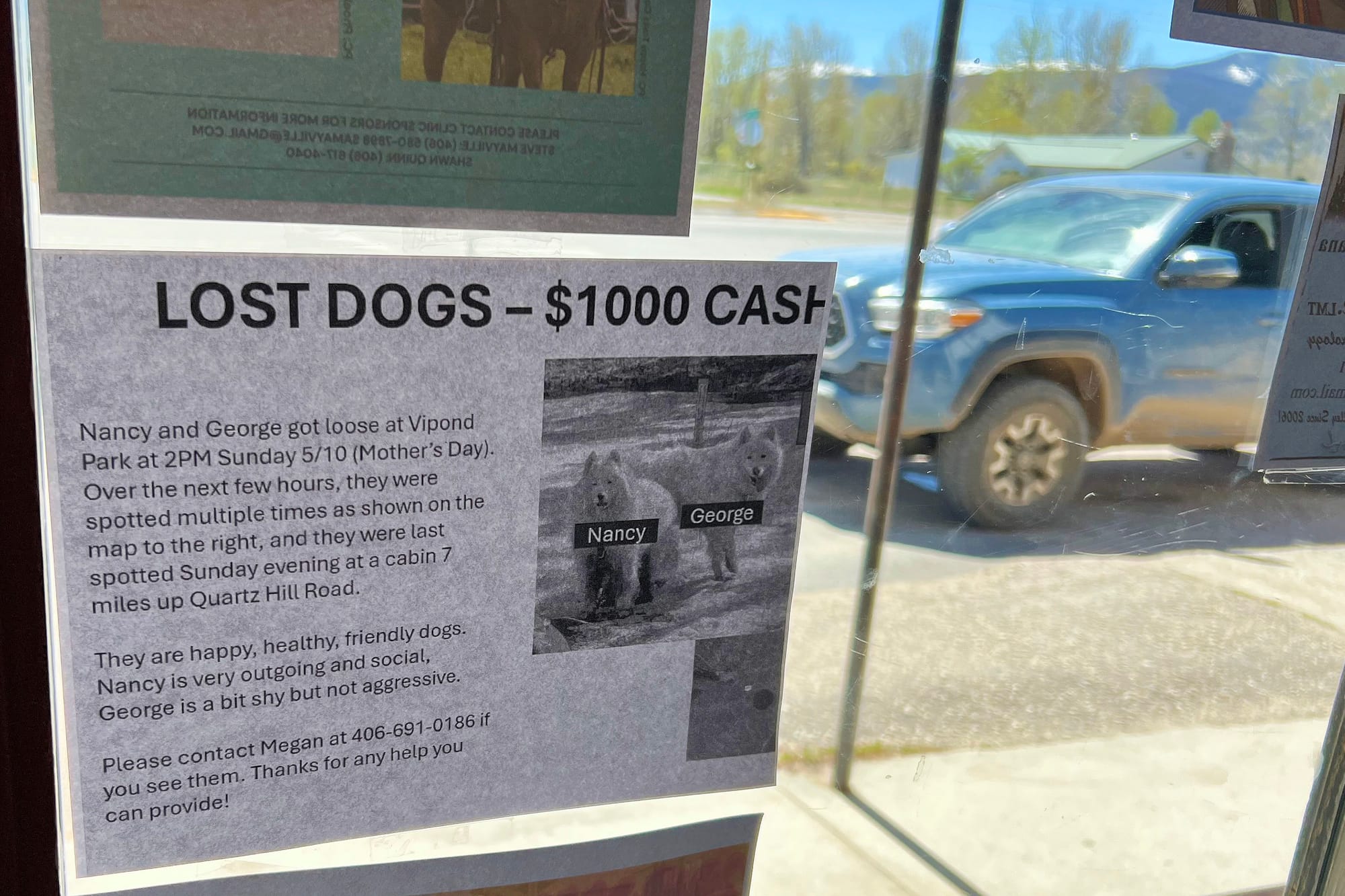
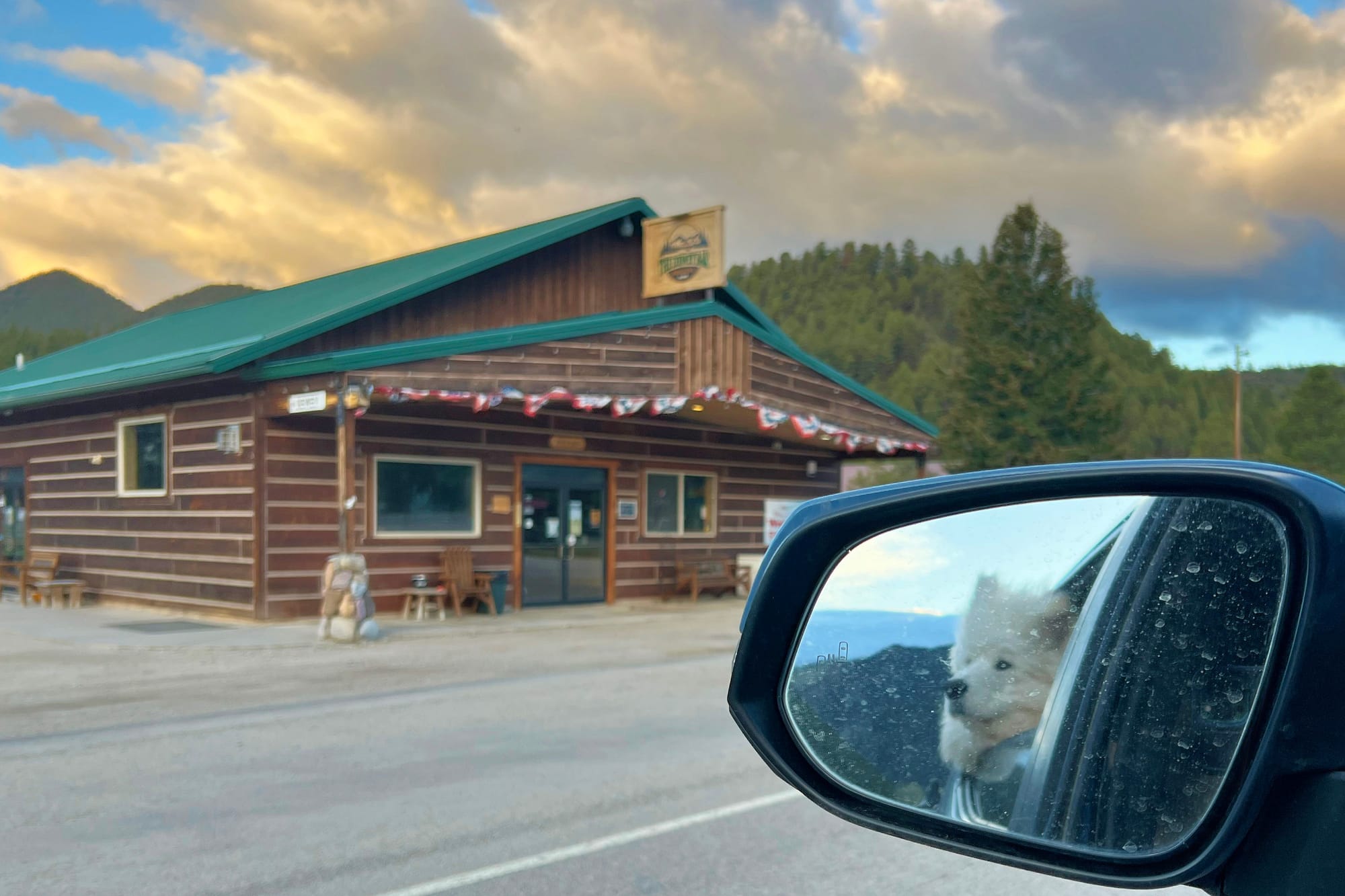
Left: $1000 poster at the general store in Wise River on Monday 5/11. Right: Isaac passing the bar in Dewey (with a $5000 poster on the door) early the morning of Thursday 5/14.
Being there
Spreading the word is key, and the goal of spreading the word is simply to get more people out there searching. As I've mentioned above, it was great to see the number of searchers increasing all week long.
Speaking for myself, I felt obsessed with needing to be out there searching every day that they were missing. Every morning, I had to force myself to stay in bed until the sun came up, reminding myself that searching would be more effective in daylight, and also reminding myself that I needed rest because there was no way to know how long this would go on.
I constantly questioned whether I was spending my time on the right things when I was out searching. Search the road down from where they were last seen? Search back up on top where it all started? Search nearby places where Nancy and George have been before? Search the spots where locals told me previous missing dogs had been found? I did all of those things and more, and every day felt like a race against the clock – I was constantly aware of how many hours of sunlight were remaining.
By Friday, I was starting to feel like I had spent too much time driving up and down the 10 miles of Quartz Hill Road, so Isaac and I explored some areas a little further away, over toward the Canyon Creek charcoal kilns and down near Addson Creek and Wise River. But with 20/20 hindsight, here some things we now know:
- Nancy and George were found by people I had met and given a MISSING DOGS poster to while driving up and down Quartz Hill Road.
- Based on a variety of details (as I explained in More about the search), it now seems likely that Nancy and George never strayed farther than 2-3 miles from where they were last seen.
- Nancy and George weren't found out in a remote and inaccessible wilderness area, they were found walking down Quartz Hill Road.
So although I was questioning my judgment on Friday, with 20/20 hindsight it now looks like driving up and down Quartz Hill Road and handing MISSING DOGS posters to everyone I met was probably a good thing to be doing.
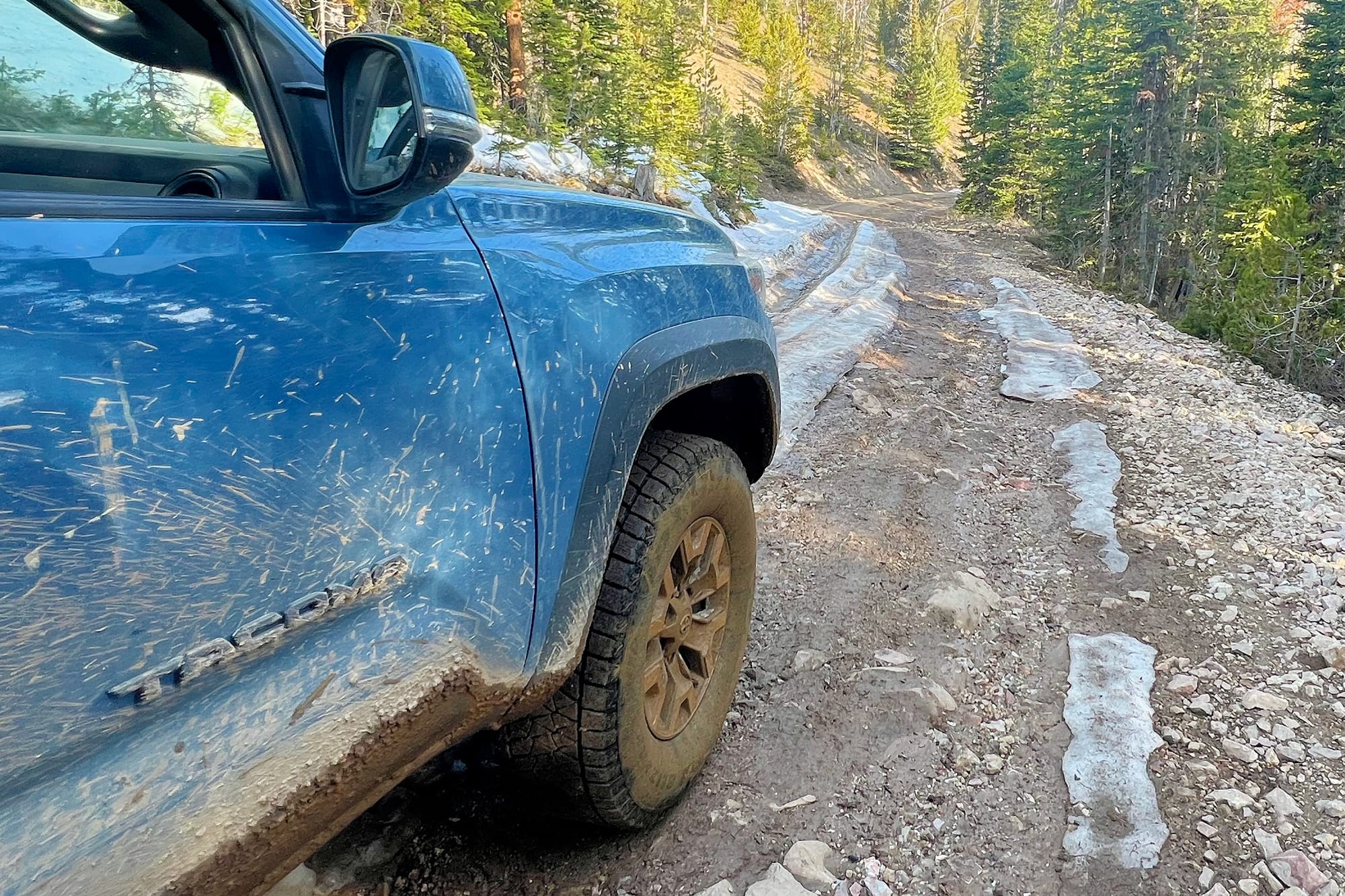
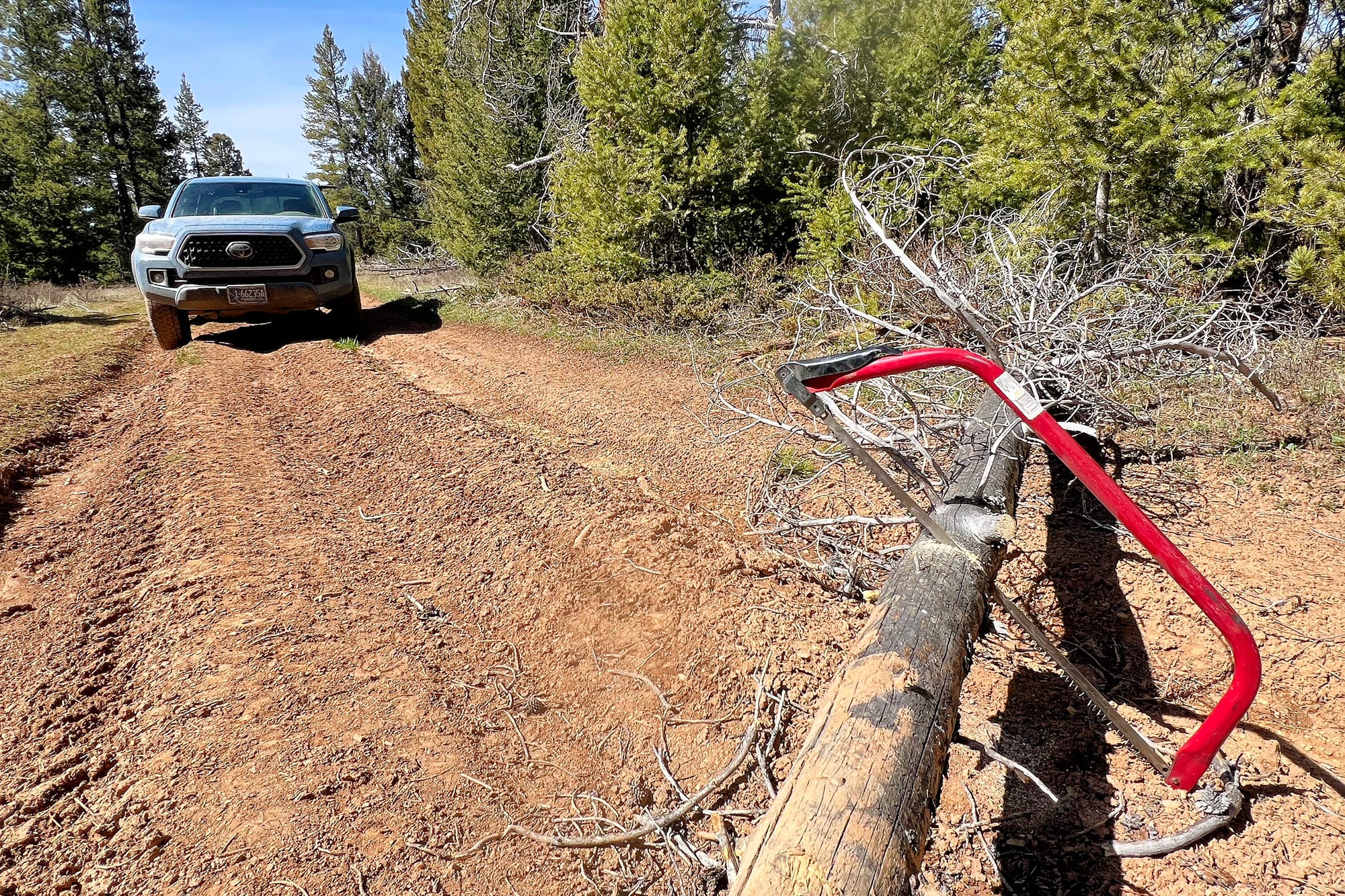
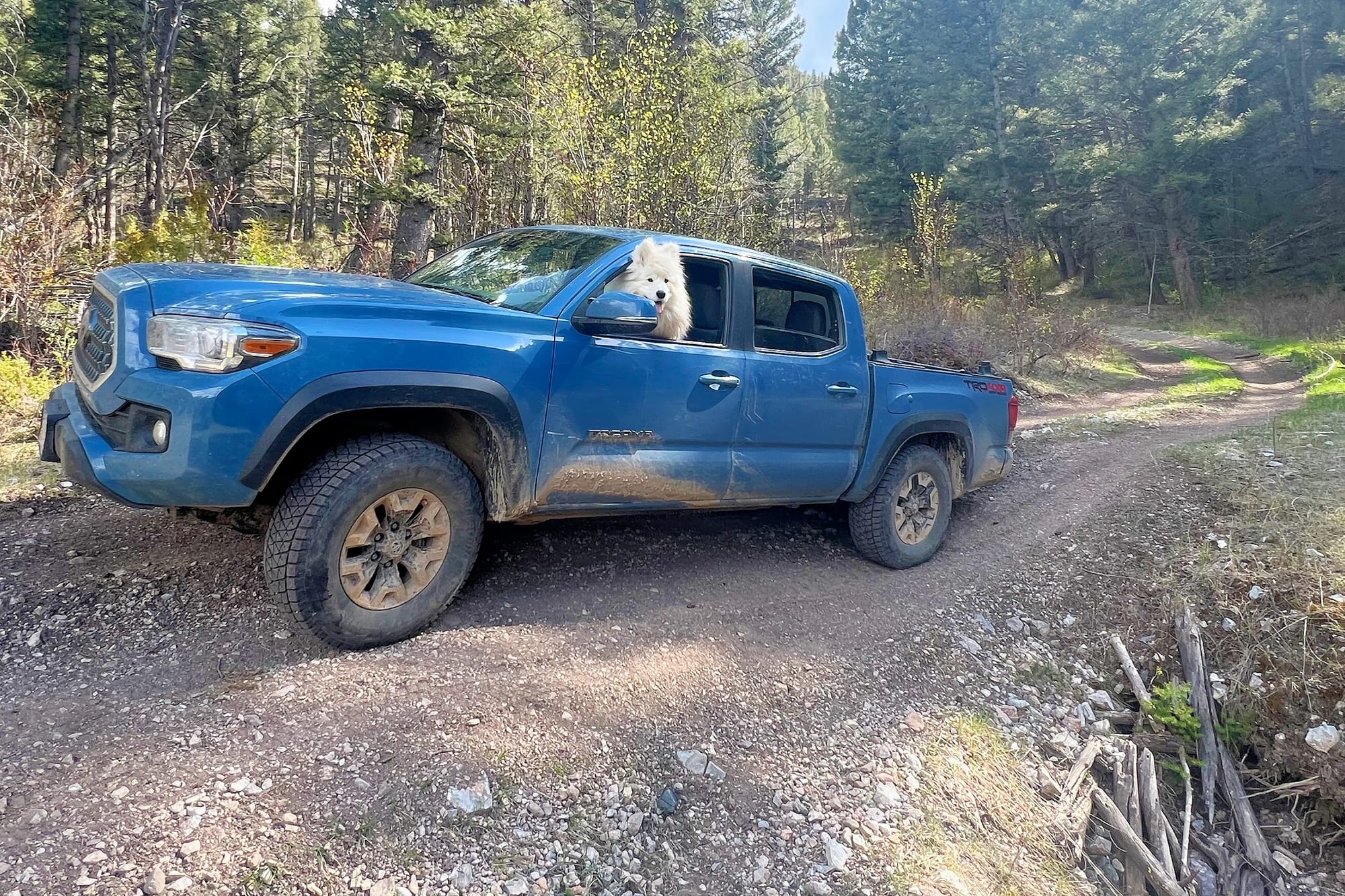
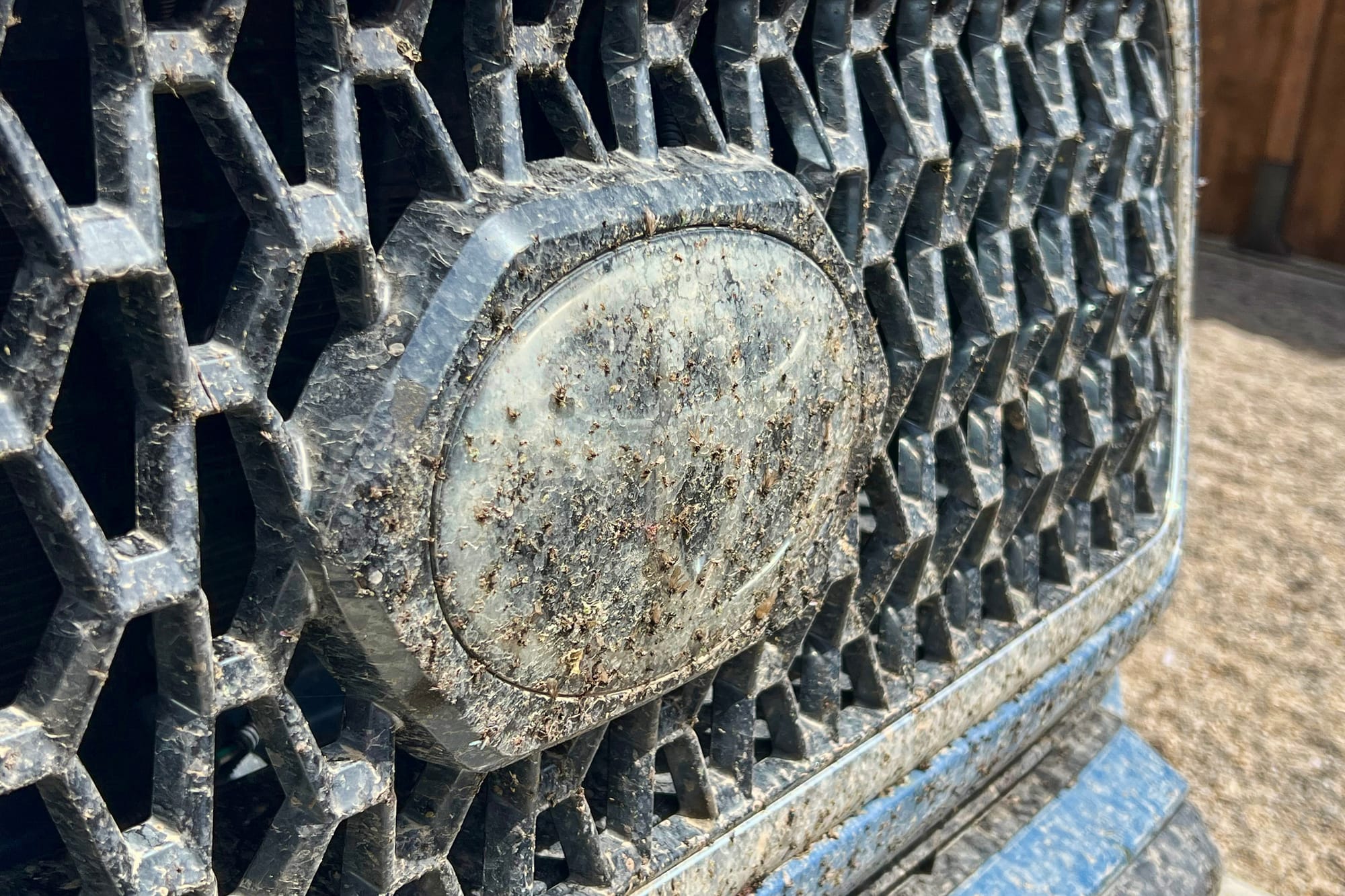
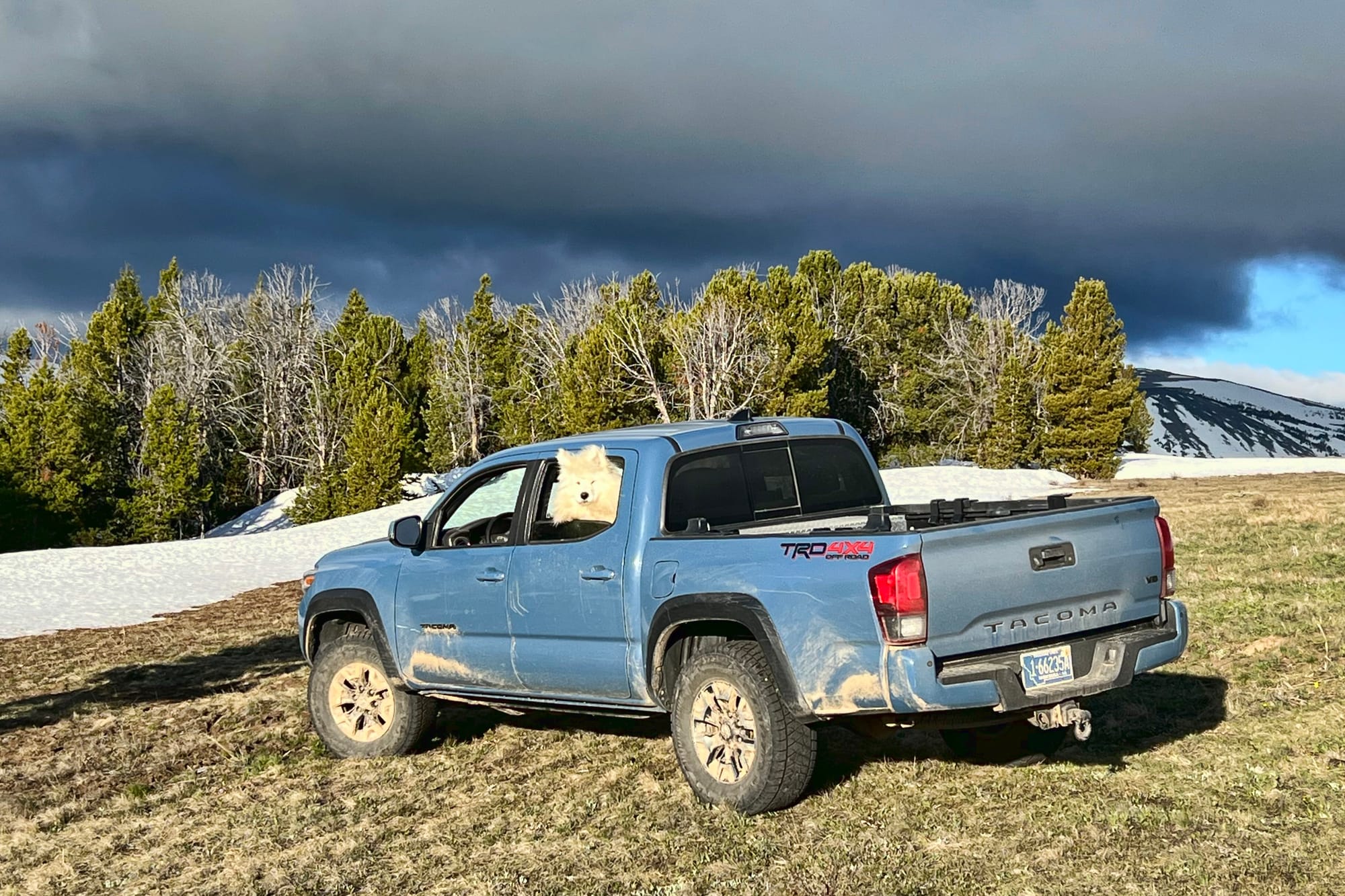
Isaac and I put lots of rough miles on the truck during our search. I'm glad we sprung for the off-road package when we got this truck, which includes a hardened steel plate under the oil pan and other components. We banged that hardened steel plate on lots of big rocks during our week of searching, but the truck held up just fine.
Offering a reward
This is a surprisingly controversial topic, we learned. Some people think offering a reward isn't necessary, others think nobody should ever accept a reward for finding a lost dog, and others have other bizarre opinions, which they shared with us. For what it's worth, here's how we approached offering a reward.
The first day, I drove Megan and Isaac home when it got dark, and went back to search a few more hours. I really thought I would find them that night, and when I headed home after 2AM I realized that the situation was more serious than we had realized. So when I got home, Megan and I decided to print a bunch of posters offering a $1000 reward. After getting a couple of hours sleep, I headed back up to Quartz Hill Road with a stack of posters and a stapler, and Megan posted it on social media and texted or emailed it to various people who might be able to help.
We were offering $1000 simply to get people's attention. But by Monday afternoon, when a full day of searching in daylight had turned up nothing, we started to worry about the possibility that somebody had picked up Nancy and George and decided to keep them. So we decided to up the reward to $5000, and we added NO QUESTIONS ASKED to the posters. More money would make no difference to good people, but if a bad person had the dogs, we wanted to make it worth their while to give them back and claim they had just found them.
We now know those fears were unwarranted. But they were real at the time, and we had people reaching out to us about known dog-nappers or dog-nappings in Southwest Montana in the past. So we did what we felt we needed to do.
Several people told us that the people who found Nancy and George shouldn't have accepted the reward, because finding and returning lost dogs "is just the right thing to do." We sure don't agree with that way of thinking. We offered a big reward because we care very much about Nancy and George and wanted them safely home. If offering a big reward made people look a little harder for them, that's exactly what we were trying to accomplish, and paying that reward was probably the most satisfying money we have ever spent.
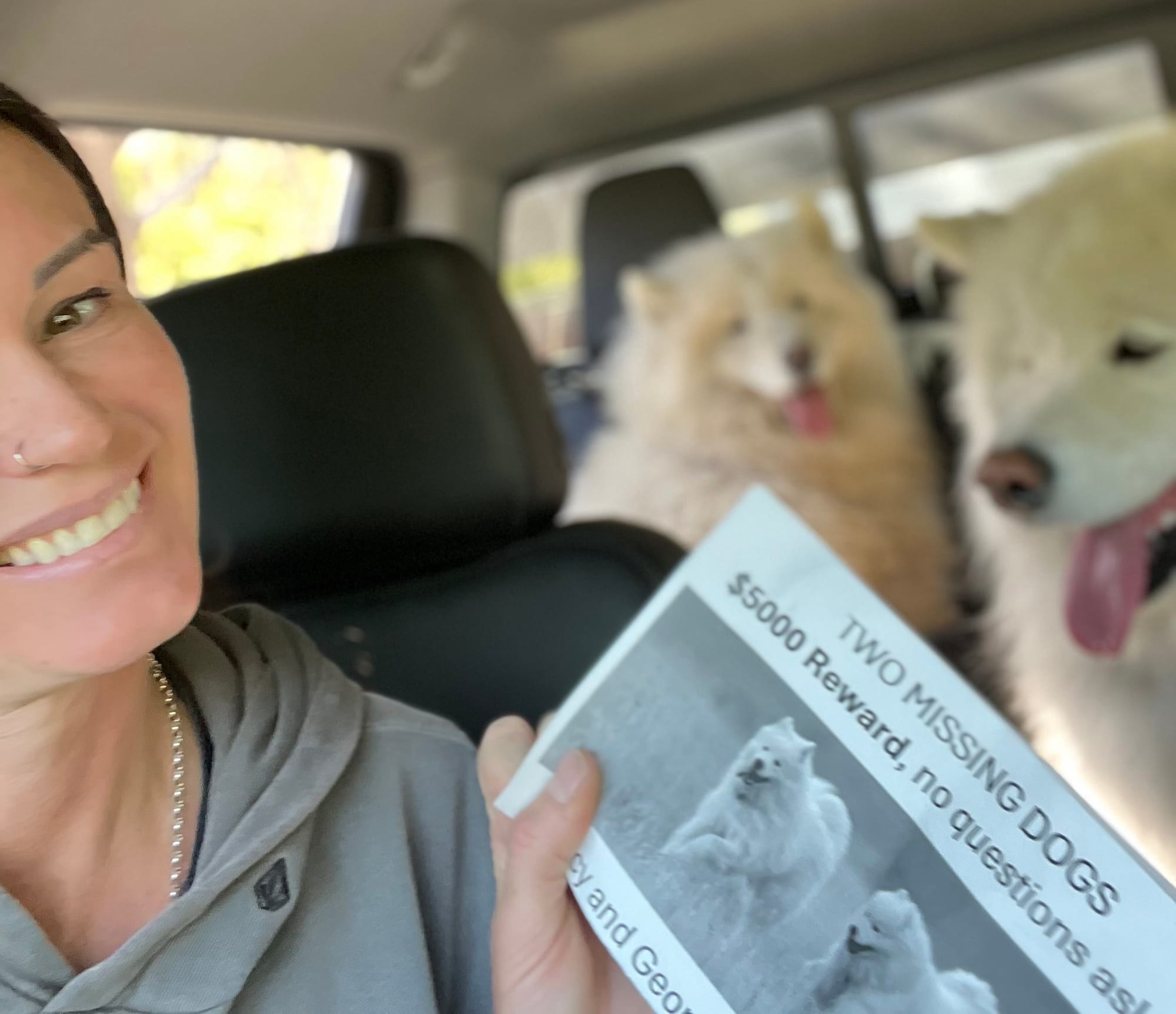
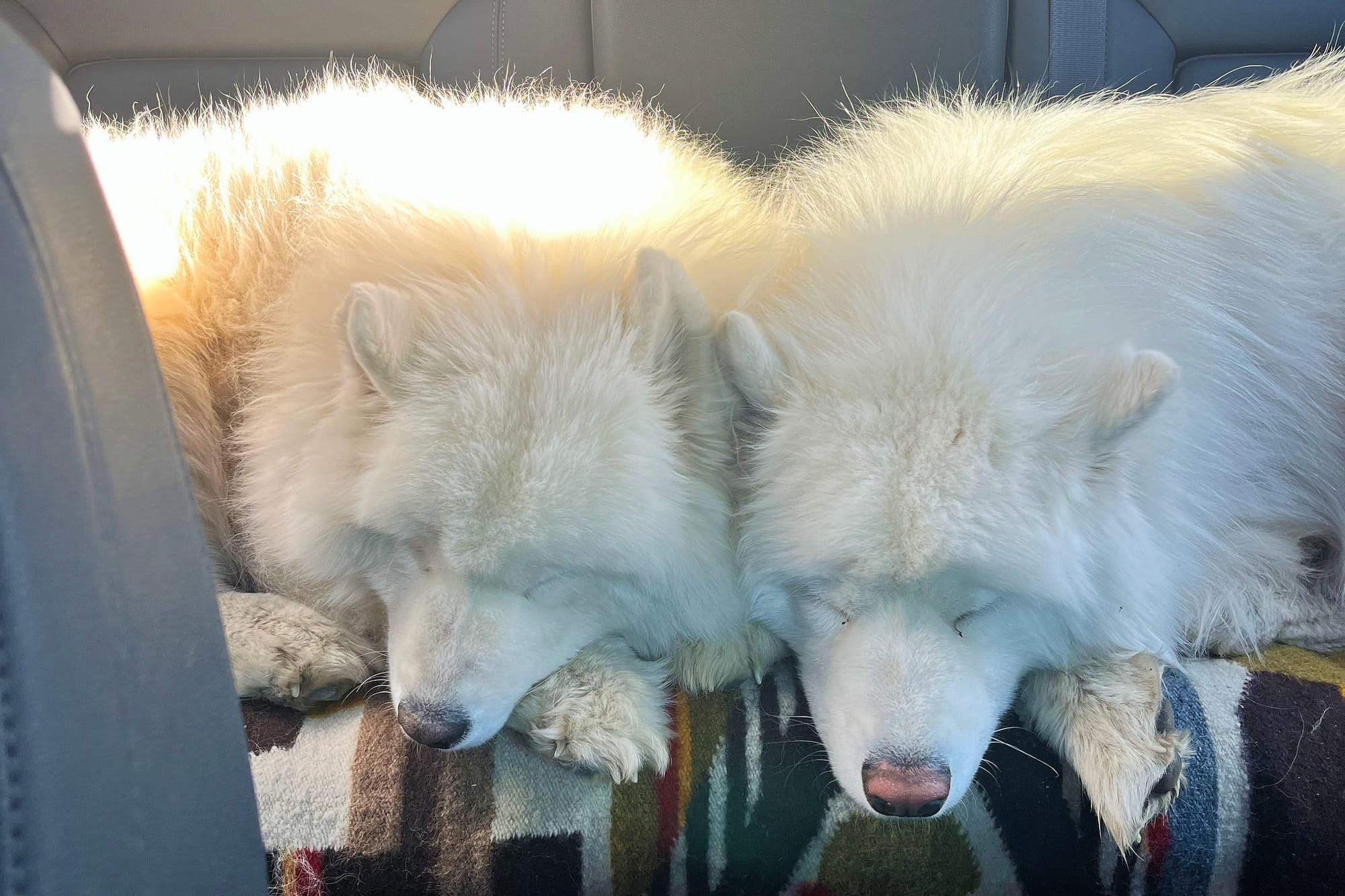
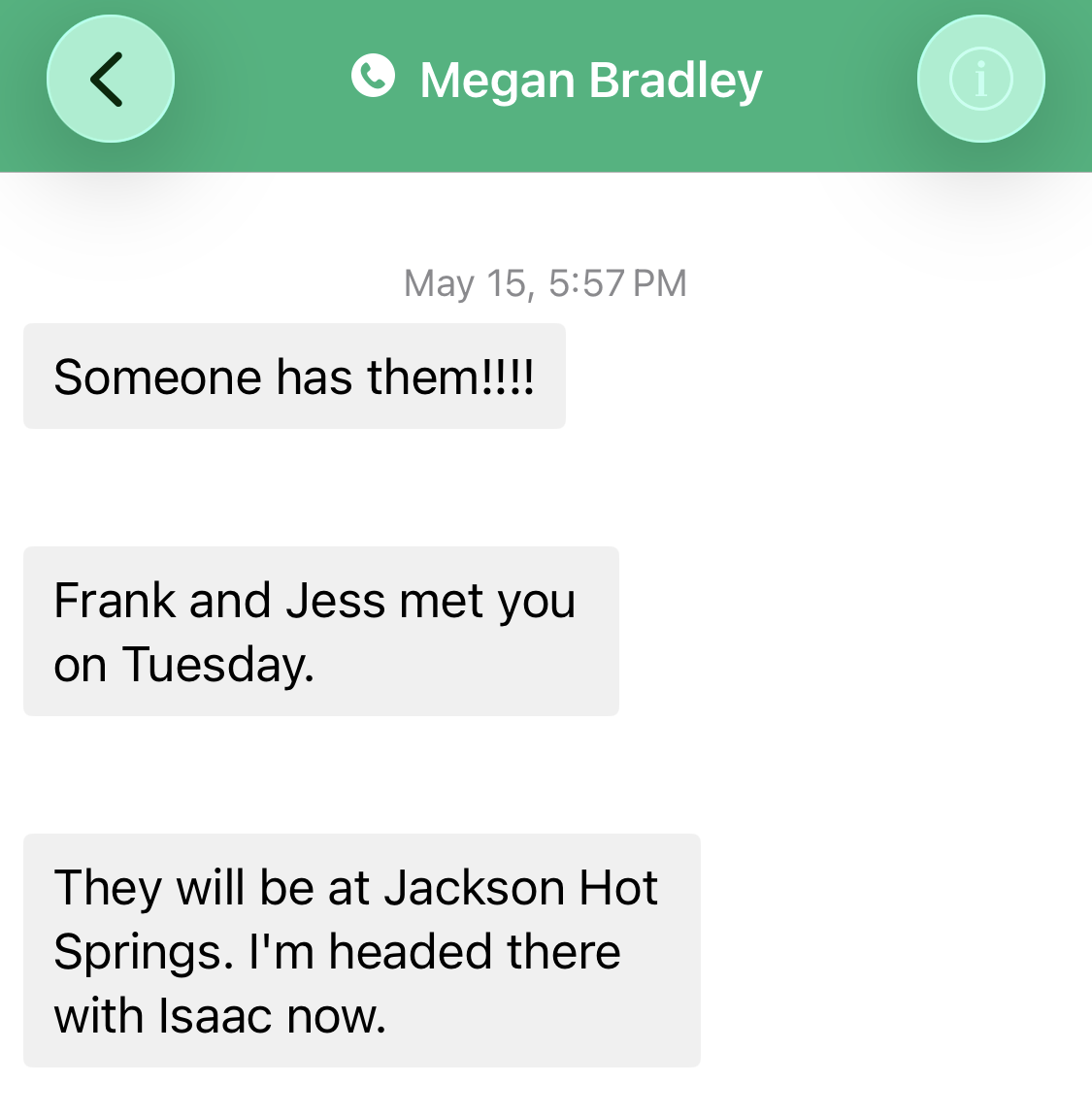
Nancy and George safely recovered, headed to the place where we would pick them up and gratefully pay the reward.
FYI, we paid the reward as soon as we had Nancy and George back. Standing on the side of a highway in a place where we had some cell coverage outside Jackson, Montana, we gave them all the cash we had, and Megan immediately sent the rest via Venmo. They drove away with the reward, and we drove away with Nancy and George.
Drones
One of the key things we learned from this experience was that big drone with an infrared thermal sensing camera is an amazingly powerful too for searching for lost dogs, or any other type of living creature. Big thanks to Calla for putting us in touch with Eric at Sky-Hound. If we were ever in this situation again, that's one of the first phone calls we'd make. Eric's drone could search huge areas quickly, even in the dark, and we could see every animal in the area, even if they were inside a thick forest.
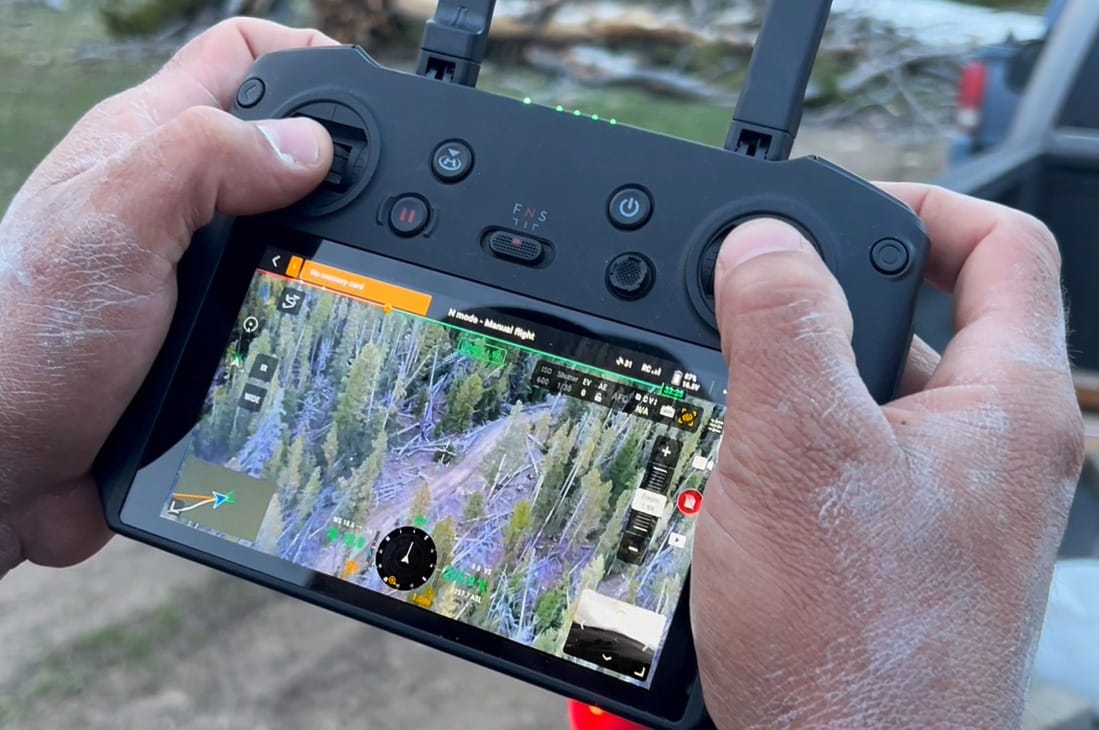
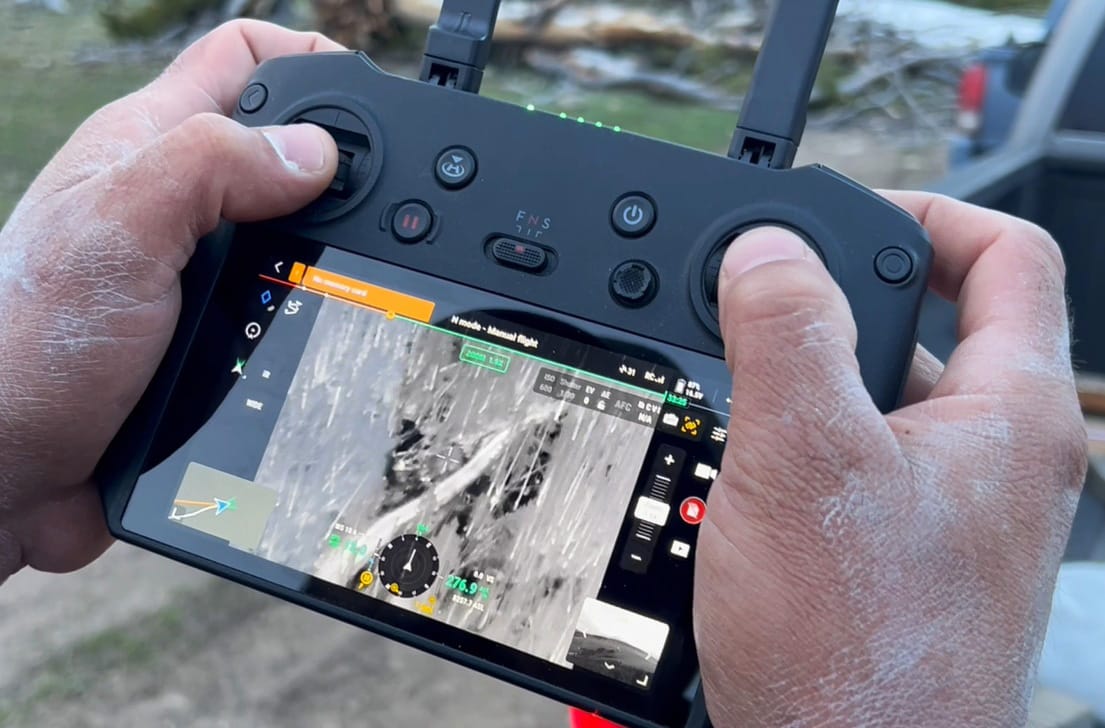
Regular view (left) and infrared view (right) of a location over a mile from where we were standing.
There's a chance of missing an animal, if they're up against a boulder or a big tree on the opposite side from the drone, and we think that may have happened when we search the area where Nancy and George were found. We searched Thursday night and didn't see them, but we saw some elk running and couldn't find what they were running from. The following morning, dog track were spotted in that area, and Nancy and George were found in that area late Friday afternoon.
Coincidentally, when Nancy and George were found I was waiting at a meetup spot along I-15 while Eric was driving back over from Bozeman, and we were planning to re-search that same area. So I think we probably would have found Nancy and George an hour or two later, if they hadn't been found first by others.
My drone, a DJI Mini 4 Pro, is a lightweight toy compared to the DJI Mavic 3 Pro that Eric used. I couldn't even have flown it in the 40MPH wind gusts that Eric flew in Thursday night. I did find my little drone useful for one thing during the week, though. When I was up in the huge Vipond meadow, there were always areas that I couldn't see because of the gently rolling hills up there. With my drone, I could fly straight up a couple hundred feet, and then scan over the top of a hill to search open grassy areas, where two white dogs would stand out.
Mapping the area
One of the challenges in our search for Nancy and George was the terrain in that area. There are steep hillsides and cliffs that dogs couldn't traverse, thick forests where they would be hard to spot, and wide-open meadows where you could see them a mile away no problem. The elevation varies from 6000 to over 9000 feet above sea level and there are only a few roads through the area. Quartz Hill Road is the main one, a rough dirt road, and there are also a few ATV tracks and a couple of side road that run a couple of miles away from Quartz Hill Road.
All of those details are clearly showing in OnX Hunt, a popular GPS app used by most hunters around the Rocky Mountain states. I used to have an annual subscription to OnX Hunt, but I let it expire a few years ago because I wasn't using it much. I restarted my subscription when Nancy and George went missing, and I used OnX Hunt heavily all week long to track where I was searching for them.
One of OnX Hunt's great features is offline maps. You can draw a rectangle and download a detailed map of that area to your phone while you have cell coverage, and then you can use the map in areas with no cell coverage. I created a map labeled Nancy and George, covering everywhere within a few miles of the search area, and I added many waypoints to it while I searched.
Below are a couple of screenshots from my phone, showing how I used OnX Hunt to track areas I had searched.
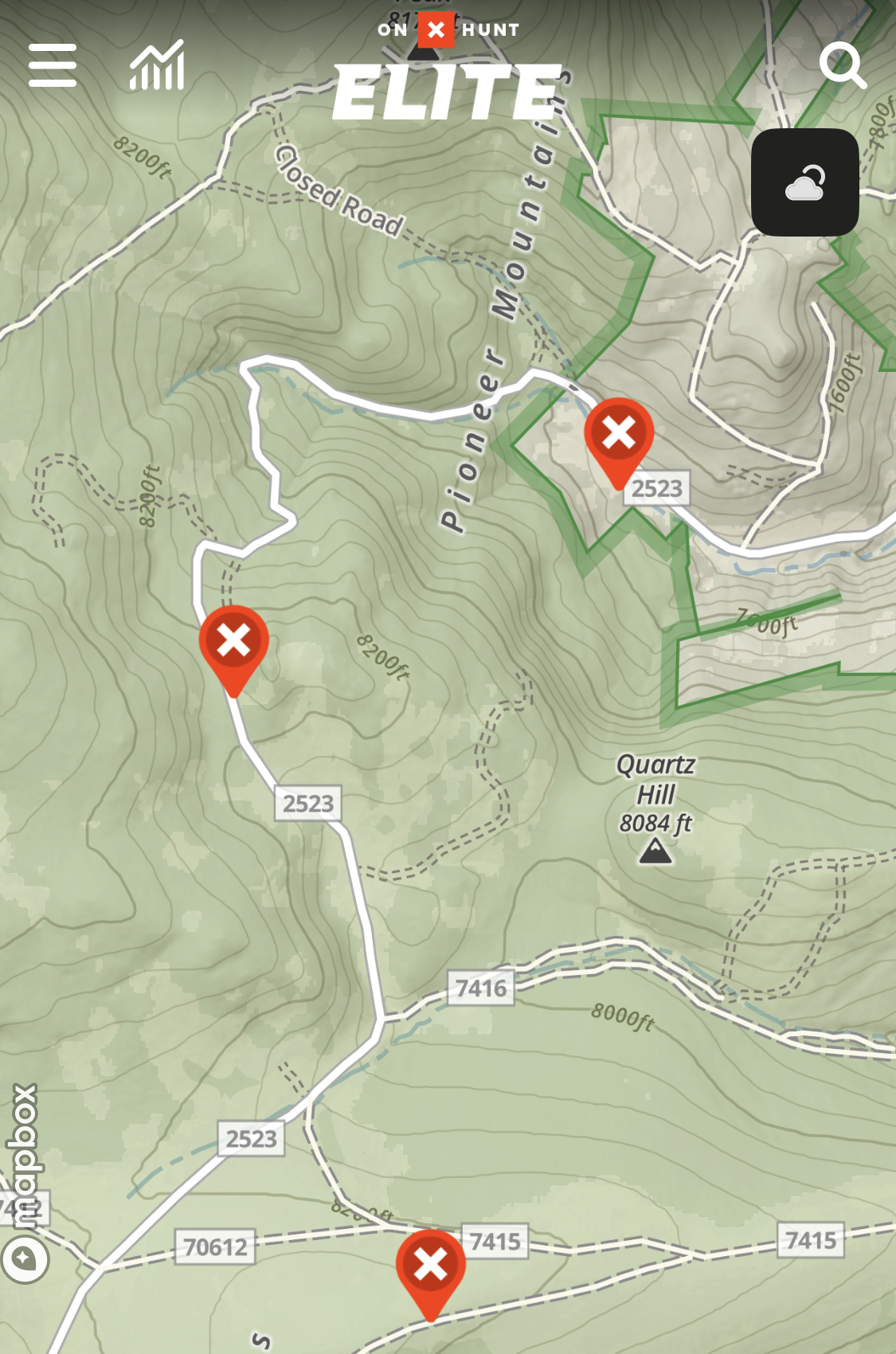
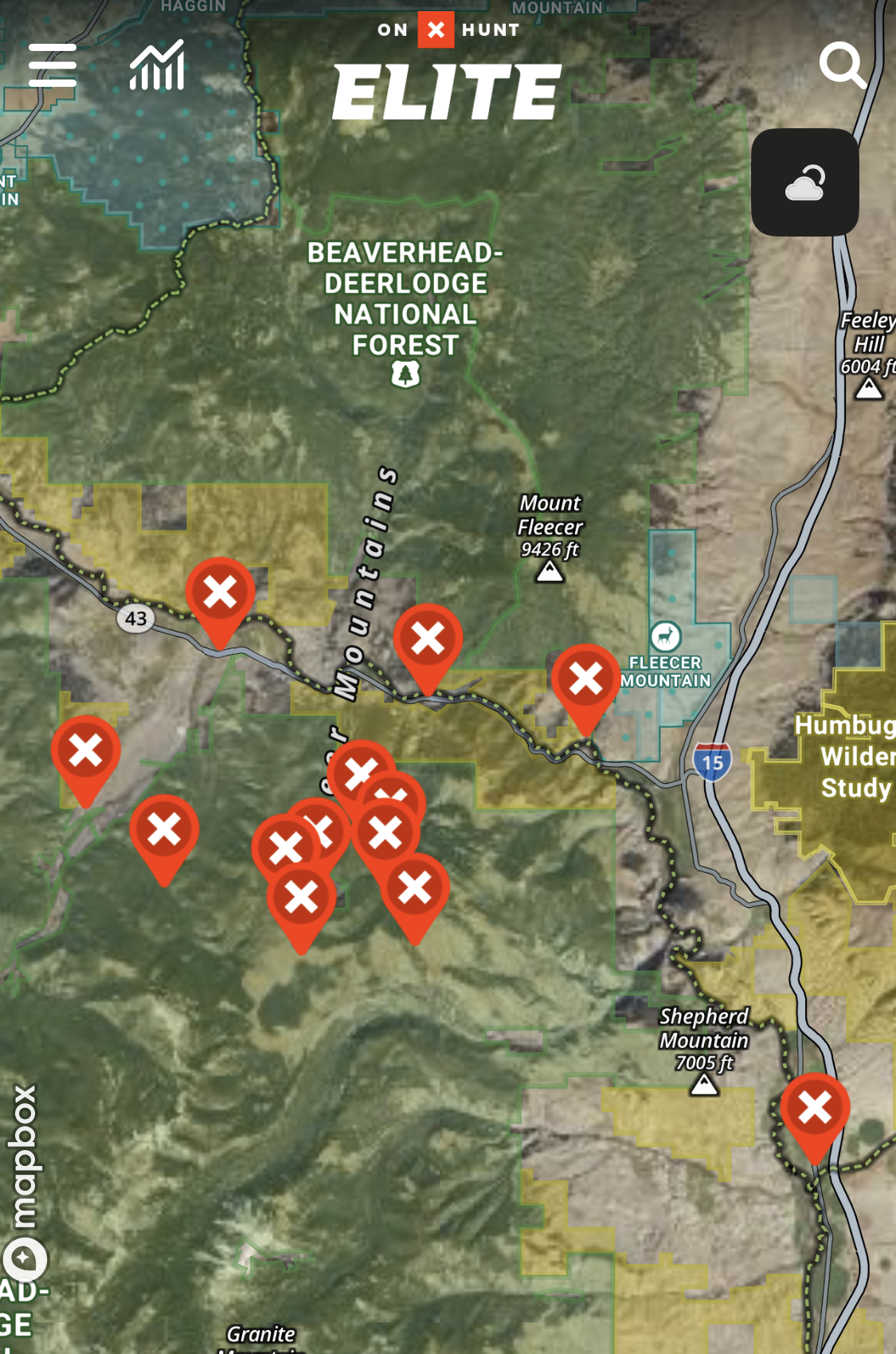
Using the onX Hunt app to keep track of key locations and areas searched.
No cell coverage
The lack of cell coverage around Vipond and Quartz Hill Road was a constant challenge. And that particular no-coverage zone is far larger than just the area we were searching. The nearest cell coverage is over near I-15 just east of the town of Divide, which is about a 40-minute drive from the meadow at Vipond Park.
Lack of cell coverage was a factor in the initial disappearance of Nancy and George, because we didn't get news of them being sighted at a cabin until 45 minutes later, when the people who saw them were over at I-15. That delay was the main reason we never found them on Sunday evening.
And lack of cell coverage affected how we searched all week. We wanted to be available for phone calls and texts to our phone numbers (which were on their tags), so we decided that Megan would stay in cell coverage at home each day, while I was searching with no cell coverage.
Megan and I stayed in close contact all week, despite my lack of cell coverage, thanks to our Garmin inReach Explorer+ satellite communicator. We swapped dozens of text messages through the Garmin, quickly and reliably. If you're curious how it works, I did a blog post last summer entitled Keeping in touch that explains all the details.
I was a huge fan of Garmin's satellite communication devices before this experience, and am an even bigger fan now. As so many people have observed in reviews, Garmin's service is rock solid. It just works, anywhere on the planet.
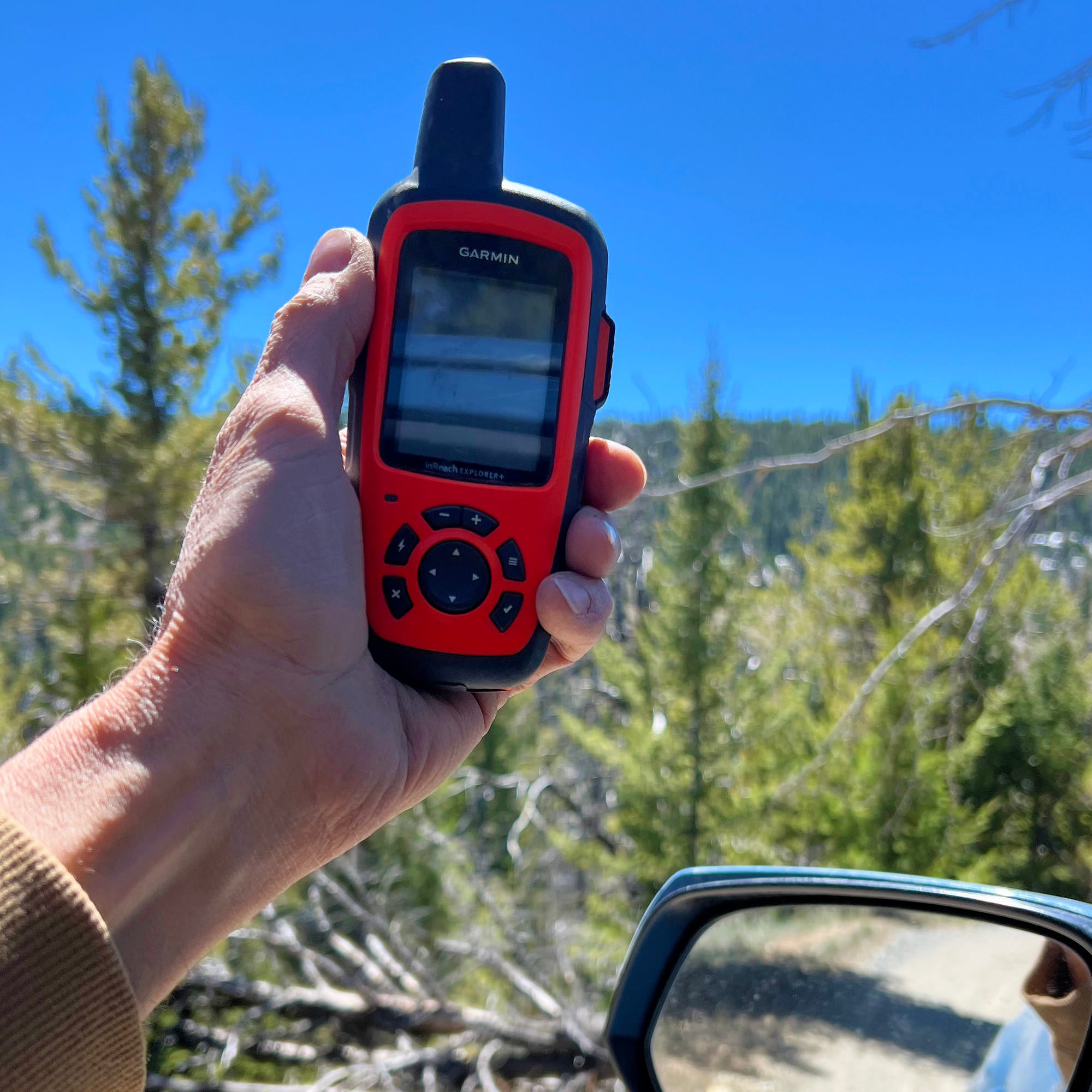
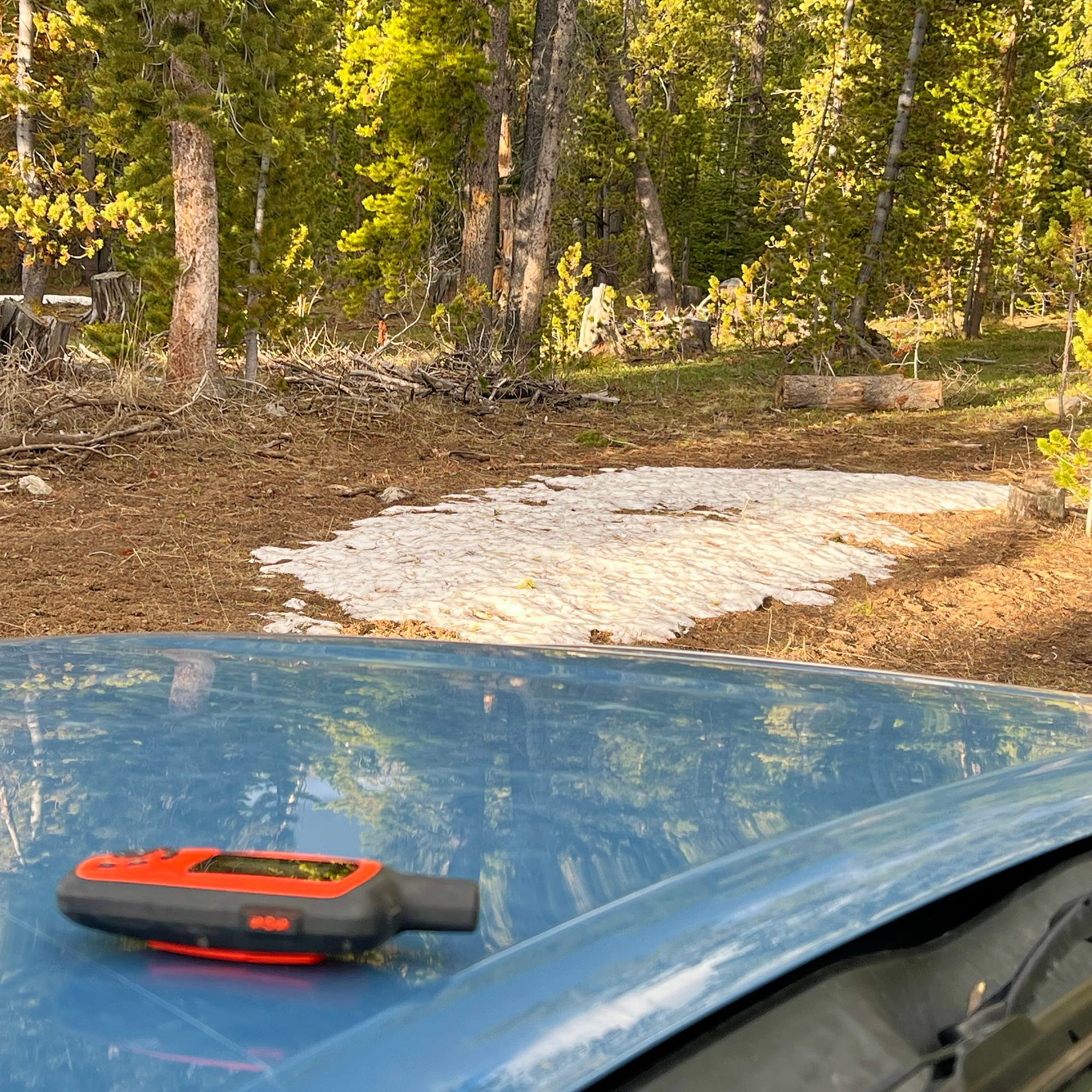
The Garmin inReach Explorer+ works best outside a vehicle (for direct connection to communication satellites). Inside the truck, it sometimes took several minutes for messages to be sent or received, but outside the truck Megan and I could swap messages almost as quickly as text messages in cell coverage areas.
Mistakes were made
Over the course of my career, I became a fan of blameless post-mortem culture. If you're not familiar with that phrase, here's a link to how Google defines it, which is pretty similar to how everyone else defines it. The aviation industry has practiced a version of blameless post-mortem culture for nearly a century, and it shows in the level of safety that we have when we fly. The core concept is that you look at every failure or problem as a learning opportunity, and that starts with documenting exactly what went wrong and why.
In that spirit, I'll end this post with a few things I think we got wrong. And by "we," of course, I mean "I." 😄
My first mistake was letting Nancy off-leash with other dogs. She was great the last time I'd had her off-leash, at Kelley Reservoir after our overnight outing to a historic hotel in Dillon last month, but she didn't have other dogs to run with then. It was just her. And if you look at any photos of our extended pack outings over the years, going back to when Nancy and Strummer were puppies hanging out with Jamie, Alice, Noodles, and Levon, you'll notice that more often than not, Nancy is running hard, out in front, with all of the other dogs chasing her. She loves that game. When I let her off-leash on Mother's Day, I should have realized that she'd run as fast as she could for a long time, thrilling in having George and Isaac chasing her. Of course she did. That's what Nancy would do.
My second mistake happened after we had Isaac back and the couple in the ATV had spotted Nancy and George running back toward where they were first off-leash. I drove over there, then back to where they had run across a big snowdrift and into the woods with Isaac. We saw two sets of tracks that we thought indicated they had run back into the woods. We now know that was incorrect, but even if it had been correct, the mistake I made was to stay right there with Megan for nearly an hour, with both of us trying to coax Nancy and George out of the woods.
That was a precious hour we wasted with all of our resources focused on a single area, and during that time Nancy and George ran over two miles down Quartz Hill Road to the cabin where they would be spotted for the last time before they went missing for five days and nights. I should have left Megan and Isaac at the snowdrift to call for Nancy and George, and then I could have driven back down the road to see if Nancy and George had slipped away in that direction when we lost sight of them behind a slight hill in the meadow. I did drive over and begin to search that area after an hour, but by then they were long gone – I should have done that right away, and I almost surely would have found them.
My third mistake was to only search downhill below the cabin after we got there. I assumed, because they had gone over 2 miles downhill to the cabin, that they would be continuing on downhill to the highway 7 miles beyond the cabin. but we now know that they almost certainly were headed back up to the meadow while we wasted the final hour of daylight on Sunday searching Quartz Hill Road below the cabin. After I had driven all the way down to the highway and didn't find them, I should have let Megan and Isaac walk down all of Quartz Hill Road calling for them, while I drove back up to the meadow to see if they had returned there. I remember saying repeatedly to Megan, as darkness approached, "something doesn't add up." Meaning that it didn't make sense that they weren't anywhere along Quartz Hill Road. But what didn't add up was my own misguided assumption that they had continued downhill.
After those three mistakes on Sunday evening, I think we actually did a pretty good job of searching for the rest of the week. Those early mistakes put us in a bad situation, but then I think we made a lot of good decisions over the next few days, doing the best we could with the knowledge and resources we had available, and eventually we got lucky when Frank and Jess and Sam found them. And even if they hadn't found them, I think we were on a good track to find them ourselves before long.
Finally, for anyone else who has to deal with this sort of nightmare, I'll sum up what we've learned like this: you must take action, you must make decisions, and you won't ever know for sure whether you're doing the right thing. In spite of that, though, things may work out fine if you keep working hard and stay positive. I hope everyone who goes through something like this can have it end as great as we did, and I hope (and am committed to assuring) that we never go through anything like this ever again!